
It’s Time to Give the Letters a Voice! 🗣️
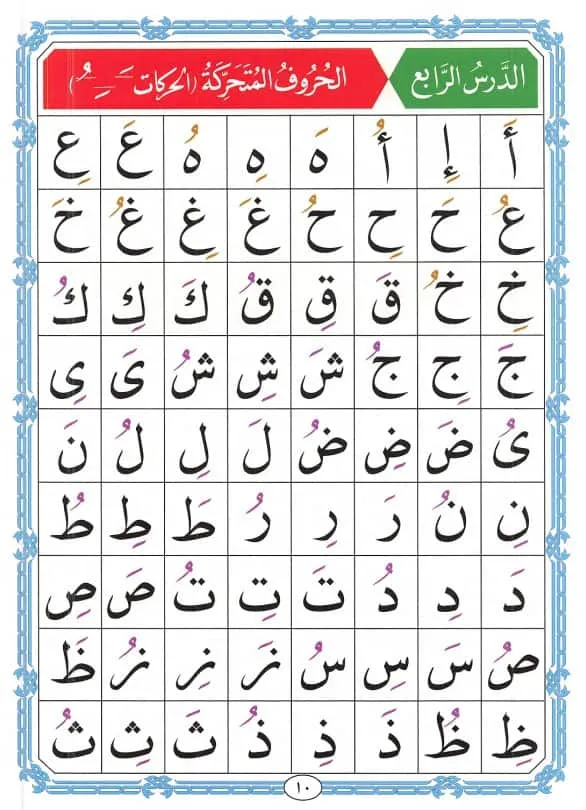
Welcome to Lesson 4. Until now, the letters were silent. Today, we give them a “soul” using Harakat (Short Vowels).
In Arabic, “Harakah” means Movement. Why? Because to produce these sounds, you must move your lips and mouth in specific shapes.
- Opening your mouth = Fatha (ـَ)
- Smiling / Lowering jaw = Kasra (ـِ)
- Rounding your lips = Damma (ـُ)
✨ The Golden Rule: Harakat are short and snappy! Think of them as a “click” sound (0.5 second). If you stretch them too long, you change the meaning of Allah’s words.
Ready to make the letters speak? Let’s go! 👇
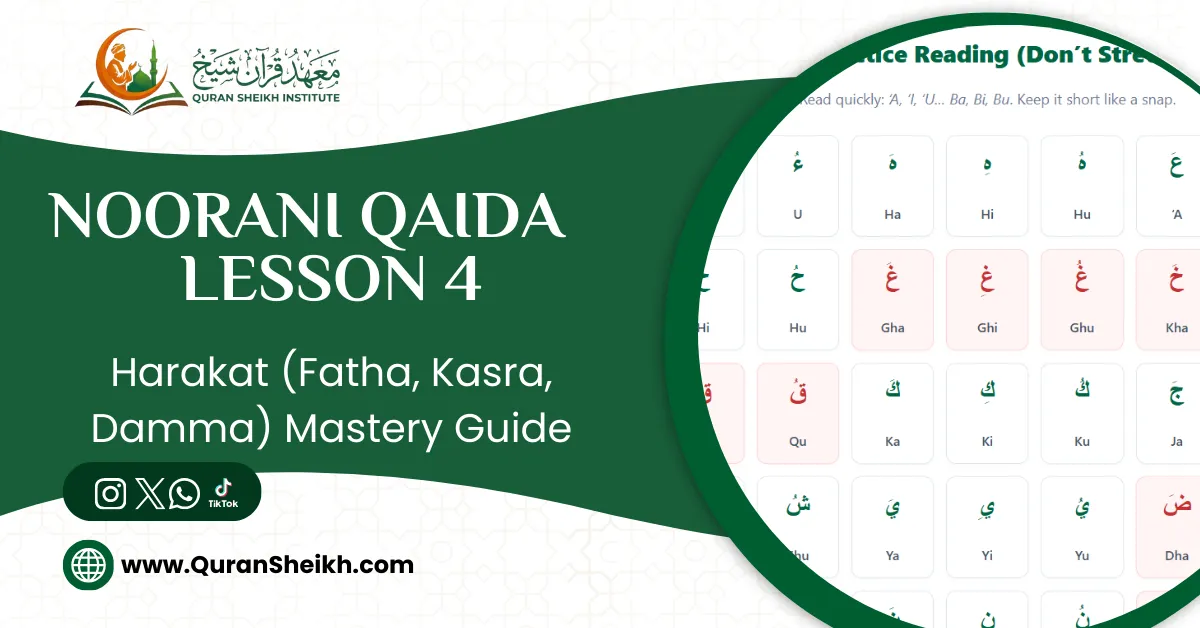
📖 Practice Reading (Don’t Stretch!)
Read quickly: ‘A, ‘I, ‘U… Ba, Bi, Bu. Keep it short like a snap.
A
I
U
Ha
Hi
Hu
‘A
‘I
‘U
Ha
Hi
Hu
Gha
Ghi
Ghu
Kha
Khi
Khu
Qa
Qi
Qu
Ka
Ki
Ku
Ja
Ji
Ju
Sha
Shi
Shu
Ya
Yi
Yu
Dha
Dhi
Dhu
La
Li
Lu
Na
Ni
Nu
Ra
Ri
Ru
Ta
Ti
Tu
Da
Di
Du
Ta
Ti
Tu
Sa
Si
Su
Sa
Si
Su
Za
Zi
Zu
Zha
Zhi
Zhu
Tha
Thi
Thu
Tha
Thi
Thu
Fa
Fi
Fu
Wa
Wi
Wu
Ba
Bi
Bu
Ma
Mi
Mu
📺 Watch the Full Lesson: Listen & Repeat

The 3 Keys of Arabic Speech
Your mouth shape determines the sound. Master these 3 shapes:
1. Fatha (The Opener)
Sound: “A” (as in ‘Up’)
Open your mouth vertically. Do not smile. Keep it short!
2. Kasra (The Breaker)
Sound: “E” (as in ‘Sit’)
Lower your jaw and stretch your lips back like a sharp smile.
3. Damma (The Hugger)
Sound: “U” (as in ‘Put’)
Circle your lips forward completely. Make a small “O” shape.
💡 Golden Tips to Master Harakat
1. The “Snap” Rule (Speed) ⚡
Think of a Harakah like a camera shutter or a finger snap. It is quick! If you stretch ( بَ ) even a little, it turns into ( بَا ), which changes the meaning. Keep it short and sharp: “Ba” not “Baaa”.
2. The “Jaw Drop” for Kasra 📉
Many beginners pronounce Kasra (ـِ) like the English “Ay” (lazy sound). To get the perfect Arabic “E” sound (like in “Bee”), you must lower your jaw physically. If your jaw doesn’t drop, the sound won’t be sharp.
3. The “Candle Blow” for Damma 🕯️
For Damma (ـُ), imagine you are blowing out a candle. Your lips must form a tight circle forward. If your lips are lazy, it will sound like “O” (Go), but we want a clear “U” (Put).
📥 Take the Classroom Home
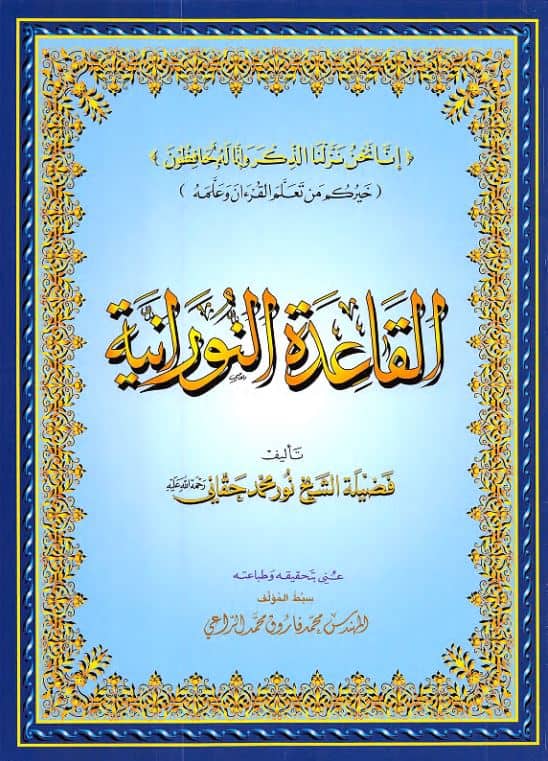
Download the Complete Noorani Qaida PDF (Free)
Don’t let the learning stop here. Get the exact book used by our Sheikhs. High-quality, clear script, and perfect for offline practice on any device.
- ✅ Crystal Clear Arabic Script
- ✅ Compatible with Mobile & Tablet
- ✅ 100% Free for Students
File size: Lightweight & Fast (PDF)
🎓 For Teachers: The Science of Vowels
Tajweed nuances for advanced learners.
1. The “Half-Alif” Concept 📏
Scientifically, a Fatha is simply a short Alif. A Kasra is a short Ya. A Damma is a short Waw.
Teacher’s Tip: Tell students that a Harakah is “half the length” of a Madd letter. If Madd is 1 second, Harakah is 0.5 seconds.
2. Alif vs. Hamza Rule ⚠️
Many students confuse Alif and Hamza. The rule is simple:
- Alif (ا): Is always empty (no vowel) and is always preceded by a Fatha. It is a sound extender.
- Hamza (ء): Whenever an “Alif shape” accepts a Harakah (أَ إِ أُ), it immediately transforms into a Hamza. It is no longer an Alif.
3. Heavy Letters with Kasra 📉
Heavy letters (like Taftheem letters: خ ص ض غ ط ق ظ) lose some of their “heaviness” when they have a Kasra (Relative Heaviness – Tafkheem Nisbi). However, they must never sound thin like smiling letters. Maintain the root elevation of the tongue.
Master the Art of Quran Recitation
Don’t rely on self-study alone. Get your pronunciation checked by a certified Al-Azhar Sheikh today.
- ✨ 1-on-1 Live Private Session
- ✨ Native Arab Tutors (Male & Female)
- ✨ 100% Free Evaluation – No Commitment
🔒 No Credit Card Required
💬 Common Questions About Harakat
What exactly are “Harakat”?
Why shouldn’t I stretch the sound?
What is the difference between Alif and Hamza?
How do I pronounce heavy letters with Kasra (like Ti vs. Ti)?
My child confuses Damma (u) with Fatha (a). Any tips?
What is the correct timing for a Harakah?
Why do some letters sound different with Damma?
Transition to Lesson 4: “Now that you have mastered the ‘Names’ of the letters, it’s time to give them ‘Sounds’! In the next lesson, we will add the vowels (Fatha, Kasra, Dammah) to make them speak.”
🎓 Ready to Level Up?
Don’t just read alone. Join our live classes with expert Sheikhs.


