
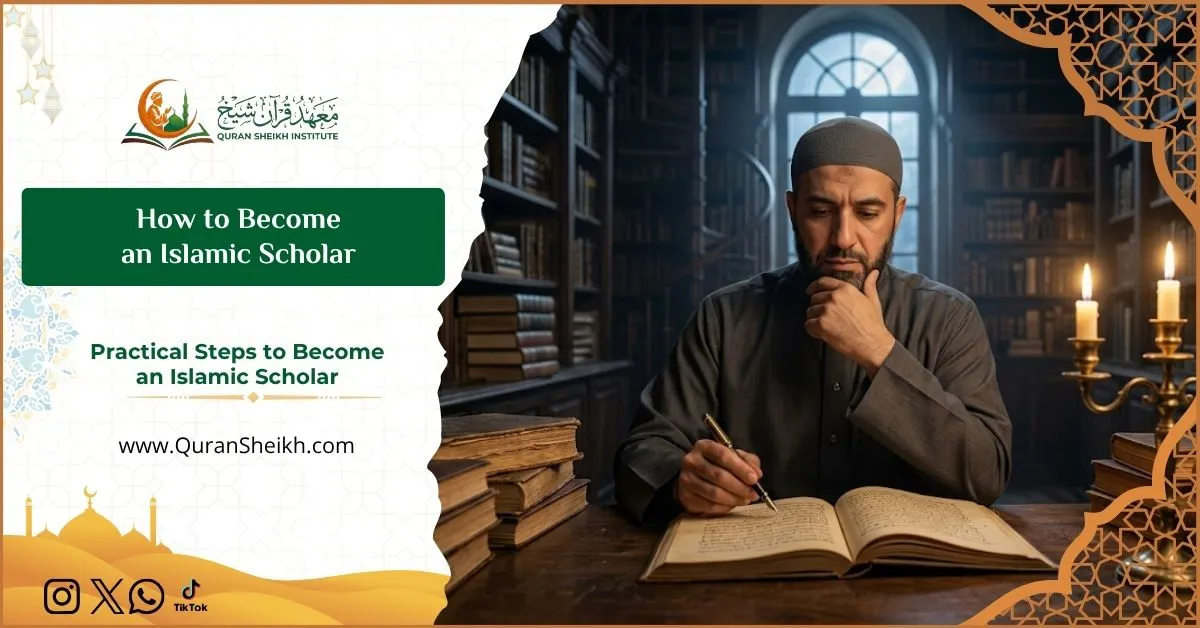
Becoming an Islamic scholar starts with learning the Quran, understanding Hadith, and gaining deep knowledge of Islamic teachings. A scholar studies Arabic, Tafsir, Fiqh, and Islamic history under qualified teachers for many years. Strong character, patience, and sincerity are also important parts of the journey. Many students begin by memorising the Quran and building a strong connection with Islamic knowledge early in life.
💡 Key Takeaways: 10 Steps to Become an Islamic Scholar
- The Path Follows a Specific 10-Step Sequence, Not Random Study: Starting with sincere intention, then Quran reading and Tajweed, memorization, Arabic language, Aqeedah, Fiqh, Hadith and Seerah, Tafsir, and finally a structured Alim course.
- Arabic Grammar Study Splits Into Two Named Branches: After basic vocabulary and reading, students move into Nahw (grammar) and Sarf (word patterns) specifically, since these unlock deeper meaning in classical Islamic texts.
- Aqeedah Rests on 6 Core Beliefs Taught Before Advanced Rulings: Belief in Allah, Angels, Divine Books, Prophets, the Hereafter, and Divine Decree form the foundational belief structure understood before studying detailed Fiqh.
- Scholarship Is Framed as Lifelong, Never a Finished Destination: Even after formal study, continuing to teach family, give reminders, revise Quran and Hadith, and keep attending scholarly lessons are described as ongoing requirements.
Practical Steps to Become an Islamic Scholar
Regular learning, guidance from authentic scholars, joining online Islamic course and consistent practice help students grow step by step.
Step 1. Make a Sincere Intention to Seek Islamic Knowledge
Every journey to becoming an Islamic scholar starts with a sincere intention. A Muslim should seek knowledge to please Allah, follow Islam correctly, and help others with truth and wisdom. Good intentions also keep a student patient during long years of study and worship. Allah praises people who learn and act upon knowledge with sincerity.
“Say, ‘Are those who know equal to those who do not know?’” (Surah Az-Zumar 39:9)
A student should also avoid studying only for fame, debates, or social status. Instead, sincerity, humility, and fear of Allah help knowledge bring real benefit in daily life and the Hereafter.
Build a Strong Islamic Foundation for You & Your Family!
Learn Aqeedah, Fiqh, Seerah, and Islamic morals 1-on-1 with certified Azhari scholars.
Step 2. Build a Strong Foundation in Quran Reading and Tajweed
A future Islamic scholar must read the Quran correctly before studying deeper Islamic sciences. Proper Tajweed helps protect the words of Allah from mistakes and improves understanding during memorization and Tafsir studies.
Important areas to learn include:
- Correct pronunciation of Arabic letters
- Basic Tajweed rules
- Daily Quran reading practice
- Listening to qualified Qaris
- Reading with a teacher for correction
- Learning stopping and pausing rules
Students should practice slowly and consistently instead of rushing. Even 20 to 30 minutes daily can improve fluency over time. Strong Quran reading skills also make Hifz, Tafsir, and Hadith studies easier later in the learning journey.
Step 3. Memorize the Quran Step by Step
Memorizing the Quran gives a strong base for becoming an Islamic scholar. Many scholars began their journey with Hifdh course because it improves focus, Arabic vocabulary, and connection with Islamic knowledge. A student should follow a simple and regular plan instead of trying to memorize too much too quickly.
- Start with short Surahs
- Set a daily memorization target
- Revise old lessons every day
- Read to a qualified teacher
- Listen to Quran recitation often
- Practice Tajweed during memorisation
- Stay patient and consistent
Even little daily progress brings strong long-term results. Regular revision is necessary because memorization becomes weak without repetition and practice.
Step 4. Learn the Arabic Language Properly
Arabic is necessary for understanding the Quran, Hadith, Tafsir, and classical Islamic books correctly. Translations help beginners, but deeper Islamic knowledge requires direct understanding of Arabic words and grammar. Many Islamic rulings and meanings become clearer through language study.
Students should begin with simple Arabic reading, vocabulary, and sentence structure. After that, they can study Nahw (grammar) and Sarf (word patterns). Listening to Arabic Quran recitation and reading basic Islamic texts also improves learning speed. A student does not need perfect fluency at the beginning.
Step 5. Study Basic Islamic Beliefs and Aqeedah
A student of knowledge must learn correct Islamic beliefs before studying advanced subjects. Aqeedah teaches what Muslims believe about Allah, Prophets, angels, divine books, and the Hereafter. Strong beliefs protect a person from confusion and incorrect ideas.
| Basic Belief | Simple Meaning |
| Belief in Allah | Allah is One without partners |
| Belief in Angels | Angels obey Allah completely |
| Belief in Divine Books | Allah sent books for guidance |
| Belief in Prophets | Prophets taught people Islam |
| Belief in the Hereafter | Every person will be judged |
| Belief in Divine Decree | Allah knows and controls all things |
Step 6. Learn Fiqh and Daily Islamic Rulings
Fiqh teaches Muslims how to practice Islam correctly in daily life. A future Islamic scholar should first learn simple rulings before studying advanced legal issues. Learning Fiqh also helps students understand worship, halal matters, and responsibilities toward others.
Important topics include:
- Purification and Wudu
- Salah and fasting rules
- Zakat and charity
- Marriage and family matters
- Halal and haram food
- Business and financial dealings
- Islamic manners and rights
Students should study one Madhab with qualified teachers to build a clear, step-by-step understanding. Consistent learning and practical application help Islamic rulings become part of everyday life and worship.
Step 7. Study Hadith and the Life of Prophet Muhammad ﷺ
Hadith contains the sayings, actions, and teachings of Prophet Muhammad ﷺ. A student of knowledge must study authentic Hadith to understand Islam correctly and follow the Sunnah in daily life. Scholars also study the chains of narration and the reliability of narrators to protect Hadith accuracy.
The Seerah, or life of the Prophet ﷺ, teaches patience, leadership, worship, mercy, and good character. Students learn how Islam spread and how the Prophet ﷺ solved problems with wisdom and justice. Reading authentic Hadith collections and reliable Seerah books helps students connect Islamic knowledge with real actions, behavior, and practical guidance for Muslims today.
Step 8. Learn Tafsir to Understand the Meaning of the Quran
Quran Tafsir helps students understand the meanings, lessons, and context of Quranic verses. A future Islamic scholar should not only memorize the Quran but also learn what Allah teaches through each Surah and verse. Tafsir also explains the reasons behind the revelation, important Arabic words, and Islamic rulings found in the Quran.
Students should begin with simple and authentic Tafsir books before moving to detailed classical explanations. Helpful study areas include:
- Meaning of Quranic verses
- Context of revelation
- Important Arabic terms
- Lessons from Prophets
- Islamic rulings in verses
- Moral and spiritual guidance
Regular Quran study with teachers improves both knowledge and connection with the Quran.
Step 9. Study Under Qualified Islamic Scholars and Join an Alim Course
Islamic knowledge should be learned from qualified scholars who follow authentic Quran and Sunnah teachings. Teachers help students avoid mistakes, explain difficult topics, and guide them with wisdom and discipline. Many scholars spent years learning directly from experienced teachers before teaching others.
An organized Alim or alima course also gives students a structured path in Islamic studies. Most programs include Quran, Hadith, Tafsir, Fiqh, Aqeedah, Arabic grammar, and Islamic history. Some courses are available online, while others are taught in Islamic institutes and Darul Ulooms
Step 10. Practice, Teach Others, and Continue Lifelong Learning
An Islamic scholar continues learning throughout life because Islamic knowledge is deep and wide. Students should practice what they learn in worship, manners, honesty, and daily behavior. Knowledge becomes more beneficial when it changes actions and helps other people follow Islam correctly.
Helpful ways to continue growing include:
- Teaching family and children
- Giving simple reminders
- Reading Islamic books daily
- Revising Quran and Hadith
- Attending scholar lessons
- Asking questions respectfully
- Staying humble while learning
Final Words
Becoming an Islamic scholar requires sincere intention, Quran memorization, Arabic learning, and years of study under qualified scholars. Consistency, patience, and correct guidance are necessary throughout the journey. Through islamic studies for kids and islamic classes for sisters, students can gradually develop strong Islamic knowledge and understanding from an early stage.
Quran Sheikh helps students build a strong Quran and Hifz foundation for advanced Islamic learning and future scholarship.