Islamic Studies is the study of the Quran, Hadith, Fiqh, and the life of the Prophet Muhammad ﷺ. It helps Muslims learn their faith with clarity and purpose. Through it, a person understands beliefs, worship, and daily actions in a correct way. It also connects knowledge with practice, which is essential for a balanced Islamic life.
Its importance lies in building strong faith and a correct understanding. It protects from confusion and wrong ideas. At the same time, it helps improve character, discipline, and connection with Allah. Learning Islamic Studies also supports Quran memorization by giving deeper meaning to what is being learned.
What Are Islamic Studies
Islamic Studies is the learning of Islam in a complete and clear way. It is not only about reading books. Rather, it is about learning how to believe, how to worship, and how to live every day as a Muslim. It connects knowledge with action, so what a person learns is applied in real life.
Because of that, it helps build a strong relationship with Allah and gives direction in both small and big decisions.
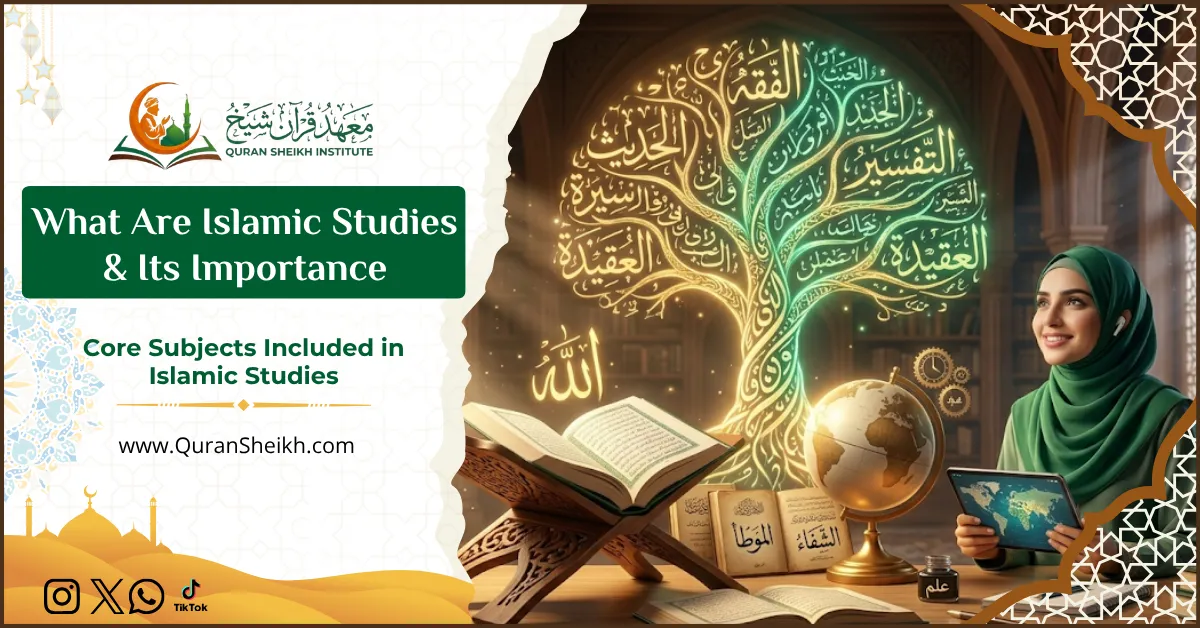
Core Subjects Included in Islamic Studies
1. Quran Studies
Quran Studies focus on learning the words of Allah with both accuracy and understanding. It starts from correct recitation and slowly moves towards meaning and reflection. So, a student does not just read but connects deeply.
- Learn Tajweed to pronounce every letter correctly (e.g., saying “صراط” properly, not like “سراط”)
- Understand the meanings of verses, like Surah Al-Fatiha, being a dua for guidance
- Memorize Surahs step by step for the Salah and Hifz course
- Reflect on lessons, such as patience, mentioned in Surah Al-Asr
2. Hadith Studies
Hadith Studies teach how the Prophet ﷺ lived Islam in real life. While the Quran gives commands, the Hadith shows how to act on them clearly. So, both go together.
- Learn sayings like “Pray as you have seen me pray” (Bukhari)
- Understand daily actions, such as eating with the right hand
- Study manners, like speaking well or staying silent
- See real examples of kindness, mercy, and honesty in practice
3. Fiqh (Islamic Law)
Fiqh gives clear rules for daily life, so a person knows what is right and what is not. It removes confusion and builds confidence in worship.
- Learn how to perform wudu step by step and what breaks it
- Understand the salah rules, like the number of rak‘ahs and actions
- Know fasting rules, such as what invalidates the fast
- Learn halal and haram in simple matters like food and earnings
4. Aqeedah (Islamic Beliefs)
Aqeedah builds the base of faith. Without correct belief, actions lose their value. So, it focuses on what a Muslim must firmly believe.
- Believe Allah is One, with no partner, and full power
- Accept that angels exist, like those who record deeds
- Believe in all Prophets, from Adam to Muhammad ﷺ
- Understand the Day of Judgment and accountability
5. Seerah (Life of the Prophet ﷺ)
Seerah brings everything to life. It shows how Islam was practiced in real situations, not just taught. So, it makes learning more real and relatable.
- Learn patience from the hardships in Makkah
- See leadership during the migration (Hijrah) to Madinah
- Understand mercy, like forgiving enemies after victory
- Follow daily habits, such as simplicity and honesty
Together, these subjects build a complete understanding of Islam, where belief, action, and character all grow side by side.
Main Sources of Islamic Studies
1. The Quran
The Quran is the first and most important source of Islamic Studies. It is the direct word of Allah, preserved exactly as revealed. Every rule, belief, and guidance starts from it. So, students begin by learning how to read it correctly and then move towards understanding its meaning.
For example, commands like establishing prayer and giving charity come clearly from the Quran. It also gives stories, lessons, and guidance for all aspects of life.
2. The Hadith
Hadith is the second main source. It explains the Quran in a practical way through the life of the Prophet ﷺ. While the Quran gives the command, the Hadith shows how to follow it properly.
- Explains how to perform salah step by step
- Shows daily manners like greeting others with “Salam”
- Clarifies rules, such as details of fasting
- Provides real-life examples of applying Islam
Objectives of Islamic Studies
- Build correct belief in Allah and core Islamic teachings
- Learn how to worship properly (salah, fasting, zakat)
- Understand halal and haram in daily life
- Develop good character and manners
- Follow the way of the Prophet ﷺ in actions
- Strengthen connection with the Quran
Importance of Islamic Studies in Islam
Islamic Studies holds a central place because it helps Muslims practice their faith correctly. Without proper knowledge, actions can easily become weak or incorrect. So, learning becomes necessary for every Muslim at their level.
- Protects from wrong beliefs and confusion
- Ensures worship is done correctly
- Builds strong faith and certainty
- Connects a person with authentic sources
- Preserves the teachings of Islam across generations
Importance of Islamic Studies for Daily Life
Islamic Studies is not limited to books. Instead, it directly shapes daily actions and decisions. From morning to night, a Muslim uses this knowledge in simple ways.
- Helps make correct choices in work and earnings
- Teaches proper manners with family and society
- Guides how to eat, speak, and behave
- Brings discipline through regular worship
- Creates awareness of right and wrong in every step
How Islamic Studies Help in Understanding the Quran
Many people can read the Quran, but true understanding comes with proper knowledge. Islamic Studies makes the Quran clear and easy to follow.
- Explains the meanings of verses through Tafseer
- Connects verses with Hadith for clarity
- Gives background of revelation (why the verses came)
- Helps understand commands and lessons correctly
- Makes memorization stronger by knowing the meanings
Who Should Learn Islamic Studies
| Age/Group | What to Learn | Focus | Simple Example |
| Children (5–10) | Basic Quran reading, short surahs | Foundation | Learn Al-Fatiha with meaning |
| Teens (11–18) | Tajweed, basic Fiqh, Aqeedah | Practice + belief | Listen to the Quran with meaning |
| Adults (19–40) | Deeper Fiqh, Hadith, daily rulings | Application | Understand halal earnings |
| Busy Individuals | Short lessons, revision | Consistency | Deeper Fiqh, Hadith, and daily rulings |
| Hifz Students | Tajweed, Tafseer basics | Memorization + understanding | Link ayah meaning while memorizing |
Final Words
Islamic Studies gives a clear path to live Islam with knowledge and confidence. It connects belief, action, and understanding in a balanced way. When learned properly, it also makes Quran memorization easier and more meaningful. This is especially beneficial through Islamic studies for kids and Islamic classes for ladies, where learning is tailored to build strong foundations and practical understanding.
Start small but stay consistent. For structured learning and Hifz support, Quran Sheikh offers guided programs to help you move forward with clarity and ease.