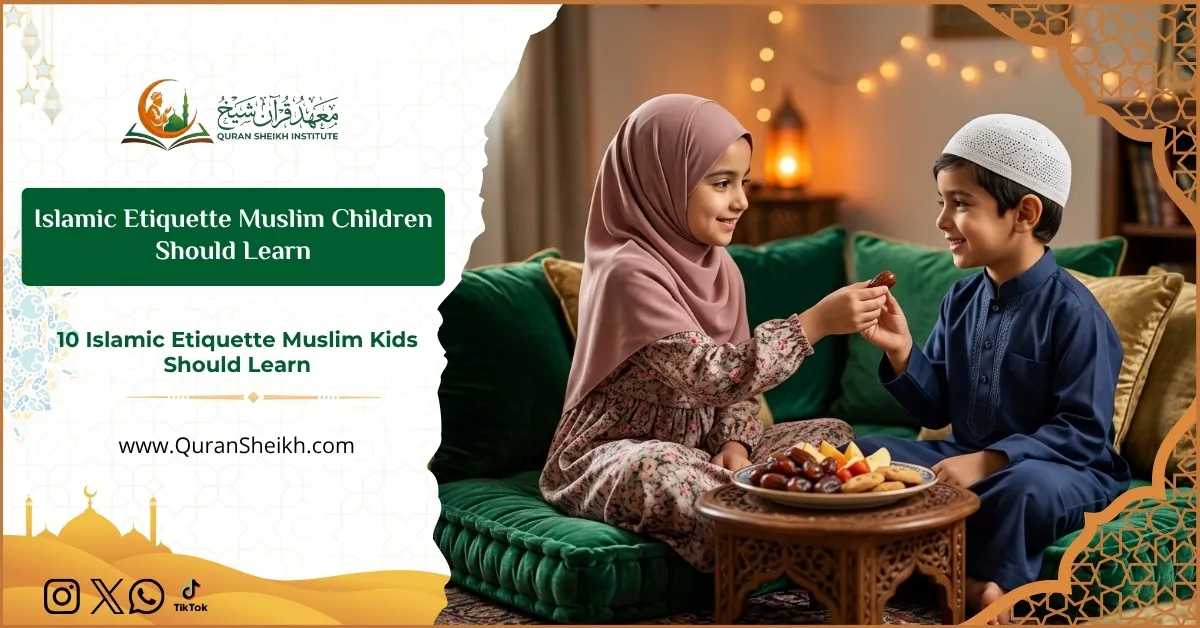
Islamic etiquette teaches Muslim children how to behave with good manners in daily life. As part of Islamic studies for kids, children should learn to greet others with salam, speak politely, respect parents and elders, tell the truth, and show kindness to people. They should also learn to ask permission, keep promises, and avoid hurting others with words or actions.
Islamic manners also cover everyday habits such as cleanliness, eating with the right hand, saying Bismillah before eating, and thanking Allah after finishing. Parents can teach these habits through regular reminders, examples, and practice.
💡 Key Takeaways: Islamic Etiquette Muslim Children Should Learn
- Salam Is the Foundation of Islamic Greeting Manners: Quran 4:86 instructs Muslims to return a greeting with one equal or better, making "Assalamu Alaikum" the first etiquette children practice daily.
- Respect for Parents and Teachers Is a Quranic Command: Quran 17:23 pairs worship of Allah with good treatment of parents, extending naturally to respect for teachers and elders.
- Honesty and Kept Promises Build Trustworthy Character: Teaching children to admit mistakes and follow through on promises, even small ones, lays the foundation for Islamic integrity.
- Everyday Manners Follow Authentic Prophetic Guidance: Saying Bismillah, eating with the right hand, and eating from what’s nearest are drawn directly from a hadith the Prophet ﷺ taught Umar ibn Abi Salamah (Sahih al-Bukhari 5376; Sahih Muslim 2022).
- Asking Permission Protects Others’ Privacy and Belongings: Children learn to knock before entering a room, ask before using someone’s item, and wait for permission before entering a home.
- Masjid and Quran Etiquette Deserve Special Attention: Quran 7:204 calls for attentive listening during recitation, while calm behavior in the masjid teaches children reverence for acts of worship.
10 Islamic Etiquette Muslim Kids Should Learn
1. Greeting Others With Salam
Muslim children should learn to greet other Muslims with “Assalamu Alaikum,” which means “peace be upon you.” It is a simple Islamic greeting that spreads peace and respect.
Allah says in Quran 4:86 that when someone greets you, you should reply with an equal or better greeting. Children can practice this by:
- Saying salam when meeting family, teachers, or other Muslims.
- Replying clearly when someone gives salam.
- Using salam when entering the home.
Regular practice helps make this good manner part of daily life.
2. Respecting Parents, Elders, and Teachers
Islam teaches children to treat parents with great respect and kindness. Allah commands Muslims in Quran 17:23 to worship Him alone and show good treatment toward parents.
Children can show respect by listening carefully, speaking gently, and helping when asked. They should also avoid rude words, shouting, or mocking older people.
Respect should also be shown to teachers because they help children learn useful knowledge. Simple actions such as waiting for a teacher to finish speaking or helping an elderly person can teach children how Islamic respect works in daily life.
3. Speaking Politely and Using Good Words
Good speech is an important part of Islamic manners. Children should learn that words can help people or hurt them, so they should choose their words carefully.
Useful habits include:
- Saying please, thank you, and sorry when suitable.
- Avoiding insults, teasing, lies, and rude names.
- Speaking in a calm and respectful way.
Parents can correct harsh speech gently and show children better words to use. For example, instead of shouting when upset, a child can explain what happened calmly. Good speech helps children communicate with kindness and respect.
4. Telling the Truth and Keeping Promises
Muslim children should be taught to speak truthfully, even when telling the truth may feel difficult. Honesty helps people trust one another and is an important Islamic character.
Children should also understand that promises should not be made carelessly. If they promise to return something, complete a task, or help someone, they should try to keep that promise.
Parents can use simple daily examples. If a child breaks an item, they should admit what happened instead of blaming someone else. Learning honesty early helps children develop responsibility in their words and actions.
5. Asking Permission Before Entering or Taking Something
Islam teaches children to respect other people’s privacy and belongings. They should learn to ask before entering certain rooms, using someone else’s property, or taking something that does not belong to them.
| Situation | Good Islamic Manner |
| Entering a closed room | Knock and ask permission |
| Using another person’s item | Ask before using it |
| Taking food or belongings | Ask the owner or parent |
| Entering someone’s home | Wait for permission |
6. Showing Kindness and Helping Others
Muslim children should learn to treat people with kindness and offer help when they can. Kindness may include helping parents at home, sharing with siblings, comforting someone who is sad, or helping a classmate.
Useful habits include:
- Helping without waiting to be asked every time.
- Speaking gently to younger children and elderly people.
- Sharing useful things fairly with others.
Children should also learn that kindness includes words, actions, and good treatment. Small daily acts can help them build caring and respectful Islamic character.
7. Following Proper Eating and Drinking Etiquette
Islam teaches clear manners for eating and drinking. Umar ibn Abi Salamah reported that the Prophet ﷺ told him to mention Allah’s name, eat with his right hand, and eat from what was nearest to him (Sahih al-Bukhari 5376; Sahih Muslim 2022).
Children can practice these manners by:
- Saying Bismillah before eating.
- Eating and drinking with the right hand.
- Eating from the food nearest to them.
- Avoiding waste and taking a suitable amount.
Regular practice makes these simple Sunnah manners easier to follow during family meals.
8. Maintaining Cleanliness and Personal Hygiene
Cleanliness is an important part of a Muslim child’s daily life. Children should learn to keep their body, clothes, mouth, and surroundings clean.
| Area | Simple Habit |
| Hands | Wash them when dirty and before eating |
| Teeth | Clean them regularly |
| Clothes | Wear clean clothes |
| Toilet use | Clean properly afterward |
| Bedroom | Keep personal space tidy |
Parents can also teach children the basic cleanliness needed before Salah, including proper wudu. Good hygiene helps children stay clean while learning responsibility for themselves and their surroundings.
9. Using the Right Hand for Good and Clean Actions
Children should learn to use the right hand for actions that Islamic teaching gives preference to. These include eating, drinking, giving something to another person, and receiving something when practical.
Simple examples include:
- Eating food with the right hand.
- Drinking with the right hand.
- Giving or receiving useful items with the right hand.
Parents can remind children gently until the habit becomes natural. Children should also understand that Islam has separate manners for toilet hygiene, where the left hand is used for cleaning after relieving oneself.
10. Showing Good Manners in the Masjid and During Quran Recitation
Children should learn that the masjid is a place of worship, so they should behave calmly and respectfully. They should avoid shouting, running in ways that disturb worshippers, or playing with items inside the masjid.
During Quran recitation, children should listen carefully, handle the Mushaf respectfully, and avoid unnecessary talking. Allah says, “When the Quran is recited, listen to it and pay attention” (Quran 7:204).
Parents can teach these manners gradually by taking children to the masjid and showing them how to behave during Salah, Quran reading, and Islamic lessons.
Final Words
Learning Islamic etiquette from a young age helps children build respectful, kind, and responsible habits based on Islamic teachings. Parents can teach these manners through simple reminders and daily practice. For more helpful Quran learning, online Islamic classes, and Islamic guidance for children, explore the resources and online learning programs at Quran Sheikh.