
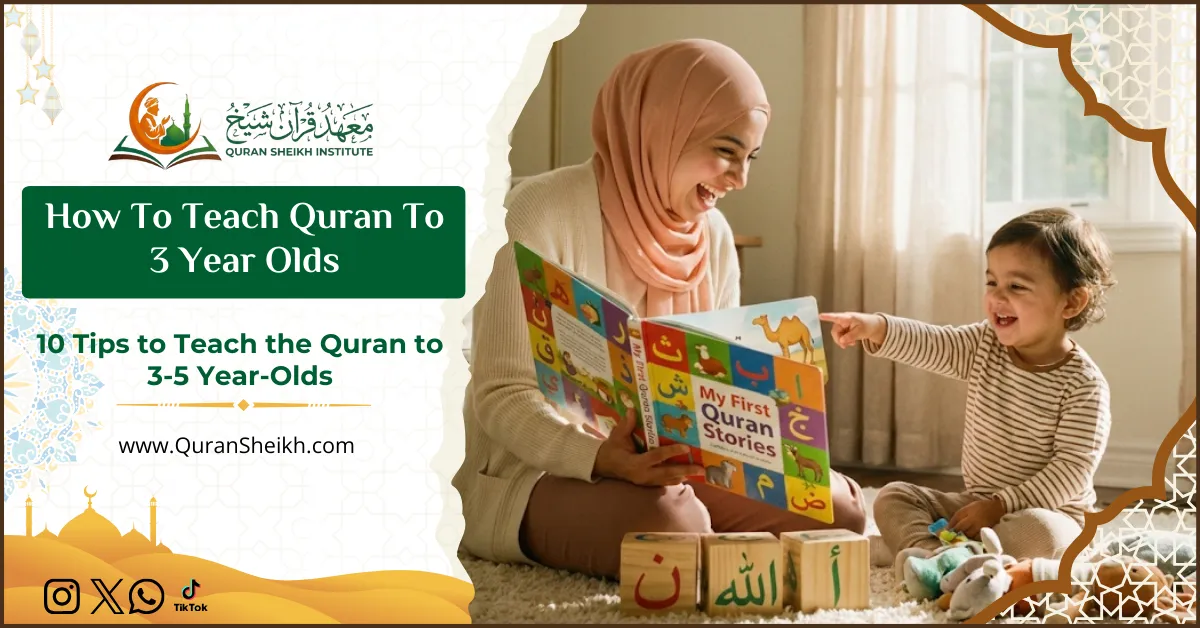
The most effective way to teach Quran to a 3-year-old is through listening, imitation, and consistency. Start with short Surahs, simple duas, and repeated verses using a calm voice. Keep sessions under five minutes, pair learning with praise, and stay consistent each day. Many families also choose supportive quran classes for kids to reinforce what is learned at home and provide gentle, structured guidance. This approach builds familiarity, love, and a strong base for future Hifz course learning.
💡 Key Takeaways: How to Teach Quran to 3-5 Year Olds
- Keep Every Session Under 5 Minutes: One short, calm recitation daily builds more love and habit than a longer session once a week, since a toddler’s attention span simply cannot sustain more.
- Stay With One Surah for Days or Even Weeks: Repeating something like Al-Ikhlas or Al-Falaq daily until the child feels fully confident, before moving to a new Surah, prevents the confusion of juggling multiple short chapters too early.
- Let Listening Come Before Any Pressure to Repeat: At this age, a child absorbs sound, rhythm, and flow simply by hearing it played during quiet moments or playtime, so words often surface on their own without ever being asked to repeat.
- Sit Beside the Child, Not Across From Them: This position feels shared rather than like a test, and children relax, listen longer, and stay calmer than when seated face-to-face in a classroom-style setup.
10 Tips to Teach the Quran to 3-5 Year-Olds
1. Keep Quran Time Under 5 Minutes
At age three or four, long lessons do not work. A child’s focus is still growing, and forcing them to sit longer creates resistance. Five minutes is enough to build a habit and love. One short session daily works better than thirty minutes once a week. For example, recite Surah Al-Fātiḥah slowly once or twice, then stop—even if the child wants to continue. Ending early keeps interest alive.
Many parents notice better results within two weeks when lessons stay short. The goal here is comfort, not completion. Think of Quran time like brushing teeth: short, regular, and calm. Over time, these small moments create a strong attachment with the Quran and remove fear from learning.
2. Focus on One Short Surah Only
Trying to teach many Surahs confuses young children. At this age, depth beats quantity. Choose one very short Surah like Al-Ikhlāṣ or Al-Falaq and stay with it for days or even weeks. Repetition builds memory naturally. When a child hears the same words daily, the tongue starts copying without effort. We have seen children recall verses while playing because they heard them often.
You can recite the Surah during bedtime or after Ṣalāh. Do not rush to the next Surah. Once the child feels confident and happy with one Surah, moving forward becomes easy and smooth.
Join 500+ families learning 1-on-1 with certified Azhari Tutors.
3. Start With Listening Only (No Pressure to Repeat)
Many parents make the mistake of asking children to repeat too early. At three, listening is learning. The child is absorbing sounds, rhythm, and flow. Let them listen to your recitation or a soft audio. Even if they look busy, they are hearing it. Some practical ways include:
- Play Quran audio during playtime
- Recite while the child colors or eats
- Use the same Qāri daily for consistency
After some time, the child will repeat words naturally. When that happens, say Mā shā’ Allāh, smile, and let it flow.
4. Sit Beside the Child, Not Like a Classroom
Position matters more than people think. Sitting beside the child creates safety and comfort. Sitting in front feels like a test. When children feel watched, they shut down. Sit on the floor, sofa, or bed together.
Hold the Mushaf or phone gently. This makes Quran time feel shared, not forced. We have seen children relax instantly when parents sit next to them. They lean in, listen longer, and stay calm. This approach works well during early morning or before sleep. Quran should feel like warmth, not discipline. The emotional bond you create here matters more than perfect words.
5. Fix One Daily Time for Quran Learning
Children love routine. When Quran happens at the same time daily, the mind prepares automatically. Choose a time when the child is fresh, not tired. Many families prefer after Fajr nap, after Maghrib, or before bedtime. Keep it simple and predictable. A few helpful points:
- Same time every day
- Same place in the house
- Same Surah or audio
Within 10–14 days, the child expects Quran time without reminders. This consistency builds discipline gently and lays the foundation for future Hifz without stress or force.
6. Fix One Daily Time for Quran Learning
A fixed time helps a young child feel safe and prepared. When Quran learning happens daily at the same time, the mind adjusts without reminders. Choose a calm moment when the child is fresh, not sleepy or hungry. Even 3–5 minutes daily is enough. Many families prefer early evening or before bedtime. Consistency matters more than length. Helpful practices include:
- Same time every day
- Same place in the house
- Same short Surah or dua
Within two weeks, children often sit willingly because the routine feels normal. This steady rhythm builds discipline gently and supports long-term Quran memorisation.
7. Praise Every Small Effort, Even One Word
At age three or four, encouragement shapes confidence. A child repeating even one word like “Qul” deserves praise. Small wins build courage. Avoid correcting too much. Instead, smile, nod, and say Mā shā’ Allāh or Ahsant. This positive response tells the child that Quran time is safe and rewarding.
Over time, children try more words on their own. Praise works best when it is instant and sincere. Some children respond better to verbal praise, others to hugs or claps. The aim is emotional safety. When effort is valued, learning becomes natural and stress stays away.
8. Use Audio Recitation During Playtime
Listening builds memory quietly. Quran audio during play allows learning without pressure. Even when children seem busy, their ears are active. Soft recitation helps words settle in the mind. This method works well with repetition and routine. Practical ways include:
- Play short Surahs during toy time
- Use the same Qāri daily
- Keep volume low and calm
Ten to fifteen minutes of background listening daily shows results within weeks. Children often repeat verses unknowingly while playing. This gentle exposure strengthens pronunciation and love for the Quran without formal sitting.
9. Focus Mostly on Supplications (Duʿāʾ)
Duʿāʾ connects children to Allah in a personal way. Short supplications are easier to remember and use daily. These duas fit natural moments like eating, sleeping, or leaving home.
| Duʿāʾ (Arabic) | Pronunciation | Meaning |
| الحمد لله | Al-ḥamdu lillāh | All praise is for Allah |
| بسم الله | Bismillāh | In the name of Allah |
| رب زدني علمًا | Rabb zidnī ʿilmā | My Lord, increase me in knowledge |
| اللهم احفظني | Allāhumma iḥfaẓnī | O Allah, protect me |
| أعوذ بالله | Aʿūdhu billāh | I seek refuge in Allah |
| يا الله | Yā Allāh | O Allah |
| جزاك الله | Jazāk Allāhu | May Allah reward you |
| أستغفر الله | Astaghfirullāh | I seek Allah’s forgiveness |
Daily use helps meaning and memory grow together.
10. Repeat the Same Verse Daily for Several Days
Repetition is the strongest tool for toddlers. Hearing the same verse daily allows the tongue and mind to sync naturally. Choose one short verse and repeat it 5–10 times daily for several days. This may happen during bedtime, after Ṣalāh, or during calm moments. Avoid switching verses too fast.
Children often surprise parents by reciting full lines after a week of repetition. This method strengthens memory without force. When repetition feels familiar, confidence grows. Once the verse becomes easy, moving to the next one feels smooth and stress-free, building a solid base for future Hifz learning.
How to Introduce the Quran to Kids?
Introducing the Quran to kids starts long before formal reading. The first step is emotional readiness, not letters or rules. Children learn best when they feel safe, loved, and connected. Build a bond outside Quran time so learning feels natural, not forced. Keep expectations realistic and focus on love first, learning second. Before starting Quran lessons, parents should prepare the environment and mindset.
Things to do before starting the Quran:
- Understand the child’s mood, energy, and attention span
- Build love for Allah through simple words and actions
- Be a role model through daily Quran habits
- Keep Quran time calm, short, and positive
Final Words
Teaching the Quran to young children works best when love, patience, and routine come first. Small steps taken daily shape strong faith and memory over time. With the right guidance, children develop a natural bond with the Quran.
Quran Sheikh supports parents through structured online Quran classes, gentle teaching methods, and trained egyptian quran teachers who understand child learning, helping families build a strong Hifz foundation from an early age.