
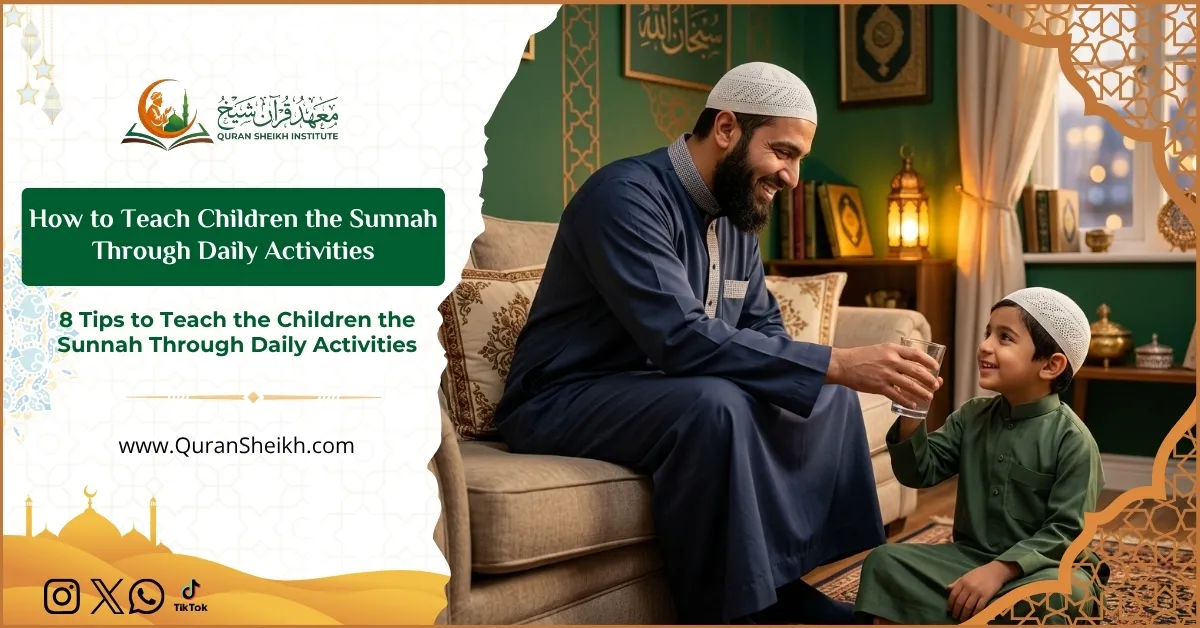
Teaching children the Sunnah through daily activities is an effective part of Islamic studies for kids, helping them learn the Prophet Muhammad’s ﷺ way in a simple and practical manner. Parents can connect Sunnah habits with regular routines such as eating, sleeping, greeting others, dressing, and showing kindness. Repeating these actions each day makes Islamic manners easier for children to remember and follow. For example, children can say Bismillah before meals, eat with the right hand, give salam, and make bedtime duas.
“💡 Key Takeaways: How to Teach Children the Sunnah Through Daily Activities
- Small Daily Habits Build Lasting Sunnah Practice: Saying Bismillah before meals, eating with the right hand, and giving salam are everyday moments that quietly teach children the Prophet’s ﷺ way.
- Short Duas Anchor Key Daily Moments: Teaching a bedtime dua, a leaving-the-home dua, and simple mealtime duas one at a time makes memorization practical rather than abstract.
- Entering and Leaving the Home Are Natural Teaching Moments: Reciting the leaving-home dua, greeting with salam, and remembering Allah when entering turn routine movement into Sunnah practice.
- Sleep and Wake Routines Offer Two Daily Practice Windows: Making wudu before sleeping, lying on the right side, and reciting the waking-up dua each morning reinforce the habit twice a day.
- Good Character Is Taught Through Everyday Actions: Encouraging kindness, sharing, honesty, and polite speech shows children that good manners are as much a part of Islam as ritual worship.
- Cleanliness Habits Connect Hygiene With Worship: Practicing proper wudu, using the right and left hand appropriately, and caring for personal hygiene link everyday cleanliness to preparation for prayer.
8 Tips to Teach the Children the Sunnah Through Daily Activities
1. Teach Children to Say Bismillah Before Eating and Drinking
Start by teaching children to say “Bismillah” before they eat or drink. The Prophet Muhammad ﷺ taught Muslims to mention Allah’s name before eating. Parents can make this part of every meal, snack, or drink at home.
A simple routine works well:
- Remind the child before the first bite.
- Say “Bismillah” together when needed.
- Let the child repeat it without pressure.
For example, before breakfast, pause for a few seconds and ask, “What do we say before eating?” Daily repetition helps children connect the Sunnah with something they already do several times each day.
2. Teach Children to Eat and Drink With the Right Hand
Children can also learn the Sunnah by using the right hand for eating and drinking. The Prophet ﷺ instructed people to eat and drink with the right hand. Parents can teach this calmly during normal family meals instead of making it feel like a difficult lesson.
If a child forgets, give a short and gentle reminder and let them continue eating. Younger children may need regular reminders until the habit becomes familiar.
Parents should also follow the same practice themselves. When children repeatedly see their family eating and drinking with the right hand, they have a clear example to copy during breakfast, lunch, dinner, and snacks.
3. Make Saying Salam Part of Daily Greetings
Teach children to use the Islamic greeting, “Assalamu Alaikum,” when meeting family members and other Muslims. Spreading salam is encouraged in the Sunnah, so it can easily become part of a child’s normal day.
Parents can practice it during common moments, such as:
- entering the home after school,
- meeting relatives or visitors,
- greeting parents in the morning.
Also teach children to reply with “Wa Alaikum Assalam” when someone gives them salam. For example, a parent entering the room can greet the child first and encourage a reply. Regular use makes salam a natural part of communication rather than something children only hear during Islamic lessons.
4. Teach Children the Sunnah Duas for Daily Activities
Children can gradually learn short Sunnah duas connected with activities they already do every day. Start with a small number and add more once the child remembers them comfortably.
| Daily Activity | What to Teach |
| Before eating | Say “Bismillah” |
| After eating | Praise and thank Allah |
| Before sleeping | Learn the reported bedtime supplications |
| Entering the toilet | Learn the reported dua before entering |
Teach one dua at a time and explain when it should be said. For example, practice the bedtime dua every night before sleep. Connecting each dua with its correct daily activity makes memorization easier and gives children a practical reason to use it.
5. Practice Sunnah Manners When Entering and Leaving the Home
Children can learn simple Sunnah manners whenever they enter or leave the home. Teach them to remember Allah, use the reported duas, and greet family members with salam when entering.
A simple routine can include:
- saying the dua for leaving the home,
- entering the home with salam,
- mentioning Allah when entering.
Parents can practice these actions with children every day. For example, before leaving for school, pause briefly and say the leaving-home dua together. When returning, encourage the child to give salam. Linking these manners with daily movement in and out of the home makes them easier to remember.
6. Teach Sunnah Habits for Sleeping and Waking Up
Bedtime is a good time to teach children several simple Sunnah habits. The Prophet ﷺ taught supplications and actions connected with sleeping, including lying on the right side and reciting specific remembrances before sleep.
Parents can introduce these habits gradually:
- make wudu before sleeping when possible,
- lie on the right side,
- read the bedtime dua and suitable adhkar.
In the morning, teach the child the reported dua for waking up. For example, parents can repeat the same dua with a younger child every morning. A regular sleep and wake-up routine gives children two clear daily times to practice these Sunnah habits.
7. Practice Kindness, Helping Others, and Good Manners Daily
The Sunnah also teaches children how to treat people well. Prophet Muhammad ﷺ encouraged kindness, mercy, honesty, good speech, and helping others. Parents can turn these teachings into simple actions during normal family life.
For example, ask children to help set the table, share with siblings, speak politely, or assist an older family member. When a child performs a good action, explain that good character is an important part of Islamic teaching.
8. Teach Children Sunnah Cleanliness and Personal Hygiene Habits
Cleanliness is strongly connected with Islamic daily life, and several personal hygiene practices are part of the Sunnah. Children can learn these habits through regular routines rather than separate lessons.
Teach age-appropriate practices such as:
- washing properly during wudu,
- using the right hand for clean activities and the left hand for cleaning after using the toilet,
- keeping the mouth clean, including learning about the use of miswak.
Parents should also teach children to keep their clothes and body clean for prayer. For example, wudu before Salah provides a regular chance to teach cleanliness. Repeated practice helps children connect personal care with Islamic manners and worship.
Final Words
Teaching children the Sunnah through daily activities helps Islamic teachings become part of normal family life. Simple habits such as saying duas, giving salam, showing kindness, and following Sunnah manners can be practiced every day. For professional Quran and Islamic learning guidance for children, visit QuranSheikh.com for online Islamic classes today and learn.